The Patient Odyssey
An interactive visualization tool that helps teams understand the emotional realities of the patient journey by transforming moments of vulnerability and choice into clear, actionable insight.
OverView
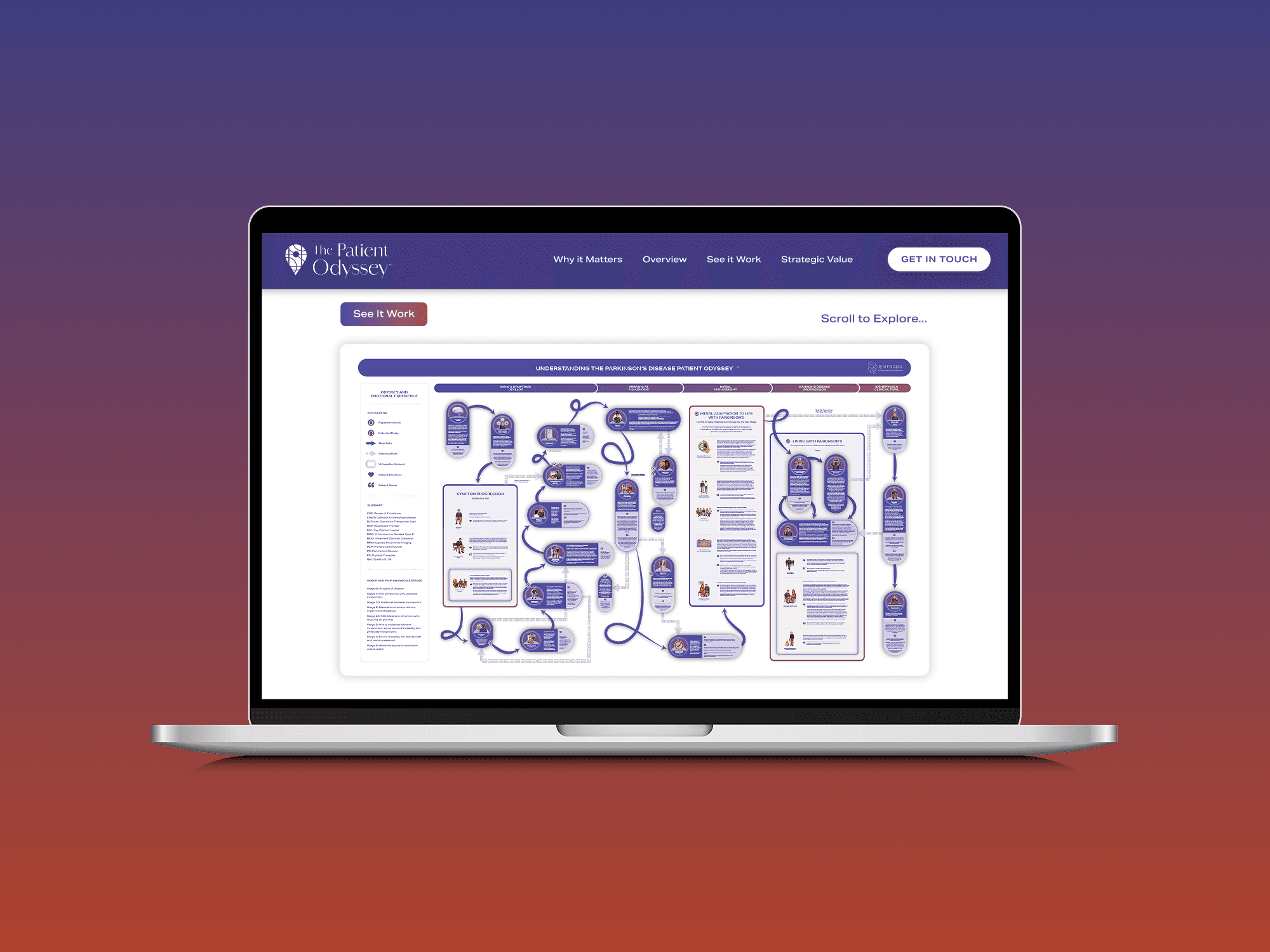
The Patient Odyssey is an interactive system designed to help teams understand and act on the emotional and behavioral realities of the user journey. Rather than presenting static insights, the experience translates complex, multi-stage journeys into a structured framework that highlights moments of vulnerability, decision-making, and opportunity. I led the end-to-end design of the experience, shaping how insights are organized, visualized, and used to guide strategic and product decisions.
The Challenge
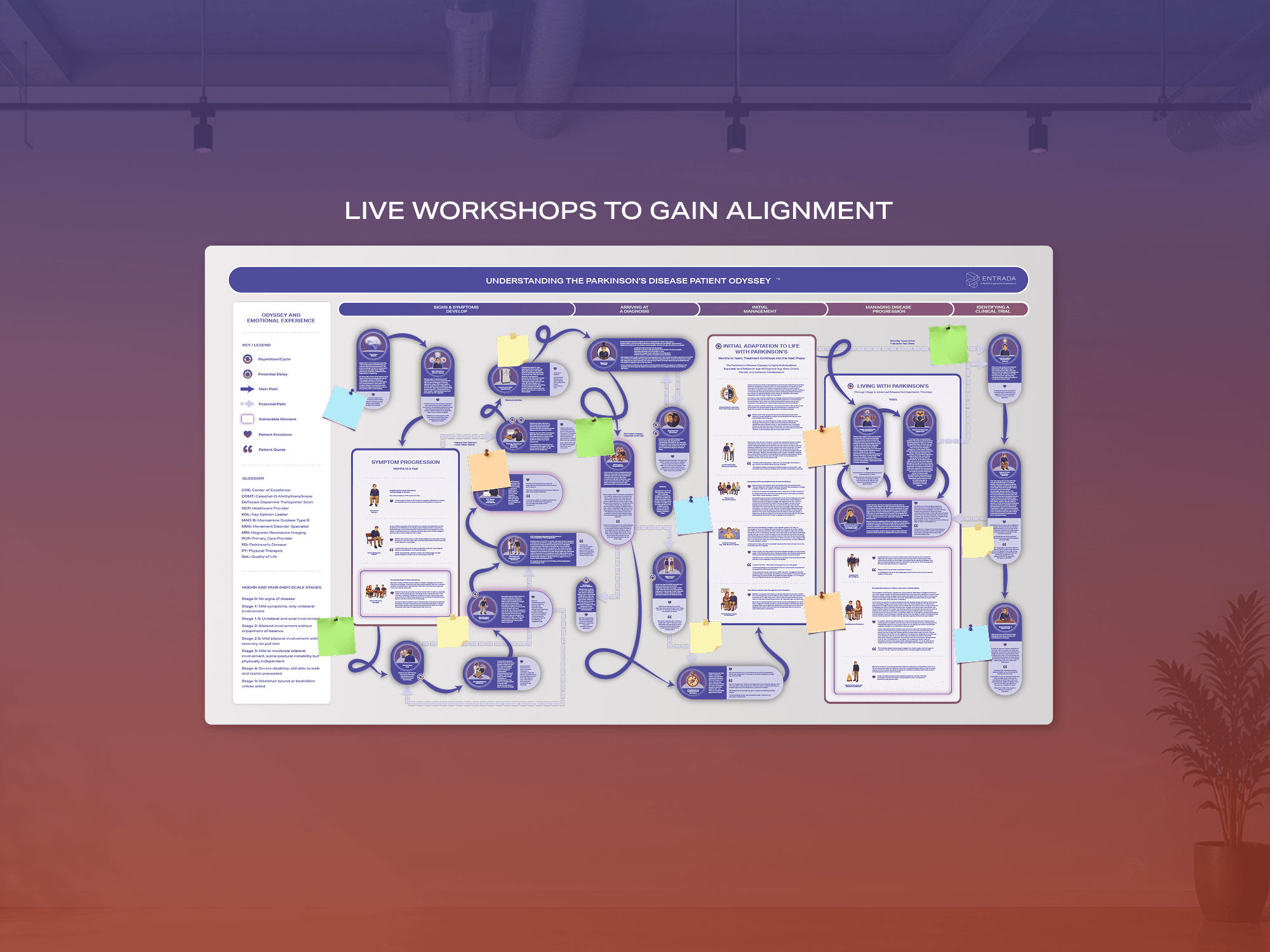
Teams often rely on fragmented research, static journey maps, or high-level summaries to understand user experiences. These formats fail to capture the emotional complexity and decision-making patterns that drive real behavior. As a result, insights are difficult to act on, and opportunities to improve the experience are often missed. The challenge was to design a system that could make these insights clear, actionable, and easy to engage with, helping teams move from understanding to informed decision-making.
The Solution
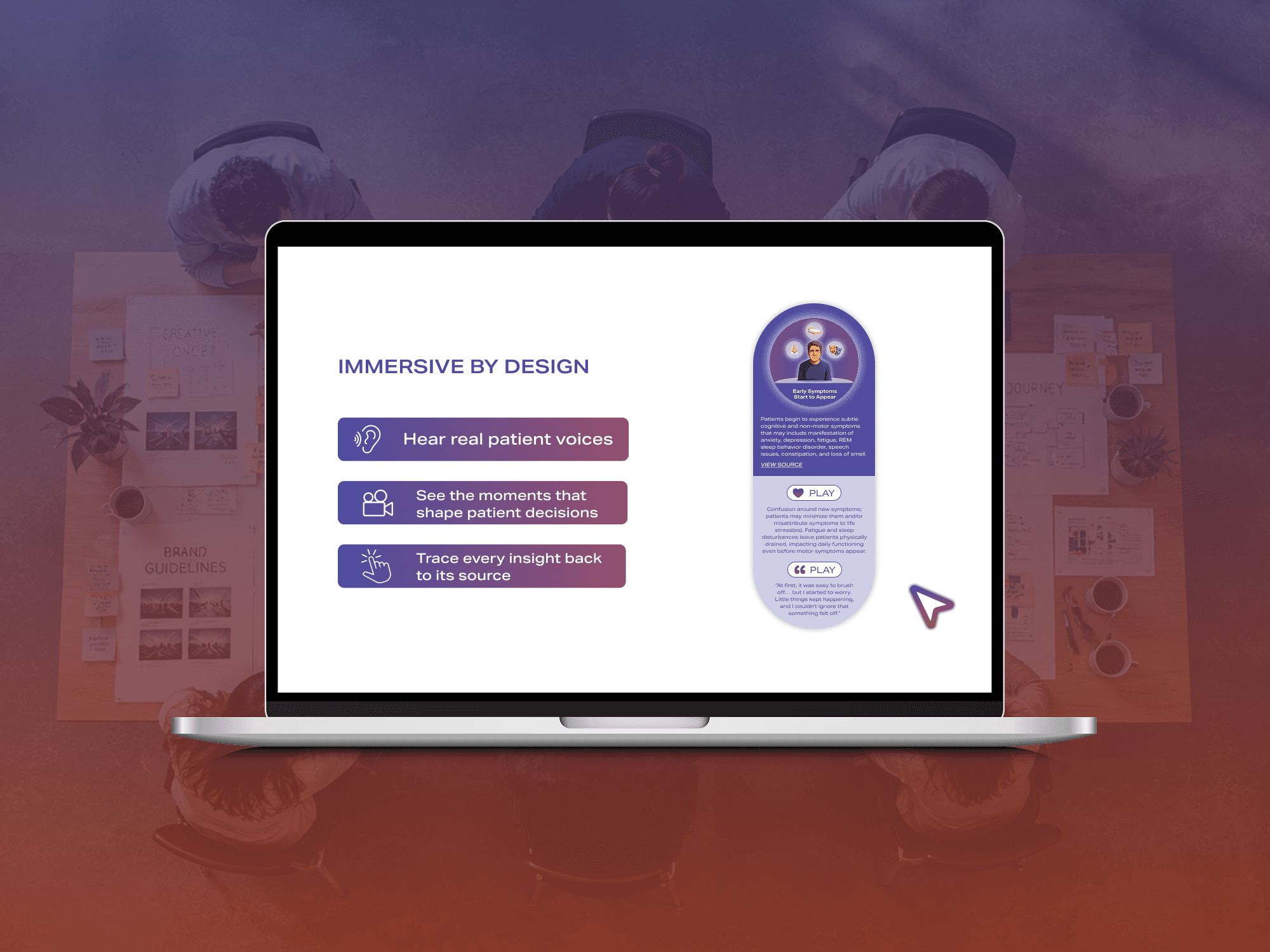
I designed The Patient Odyssey as a structured, interactive framework that organizes user insights into a clear, visual system teams can explore and act on. The experience highlights key emotional states, decision points, and moments of friction, allowing teams to quickly identify where to focus their efforts. Key design decisions included: • Structured over static visualization: Designed the experience as a navigable system rather than a one-time artifact, enabling ongoing use and exploration • Emotion as a core signal: Prioritized emotional states alongside actions to provide deeper context for decision-making • Clear action mapping: Introduced visual cues to highlight moments of vulnerability, friction, and opportunity • Scalable framework design: Built the system to support expansion into a digital platform with layered content (audio, video, sourcing) • Intentional visual hierarchy: Designed layouts to guide attention and make complex journeys easy to understand at a glance
The Process
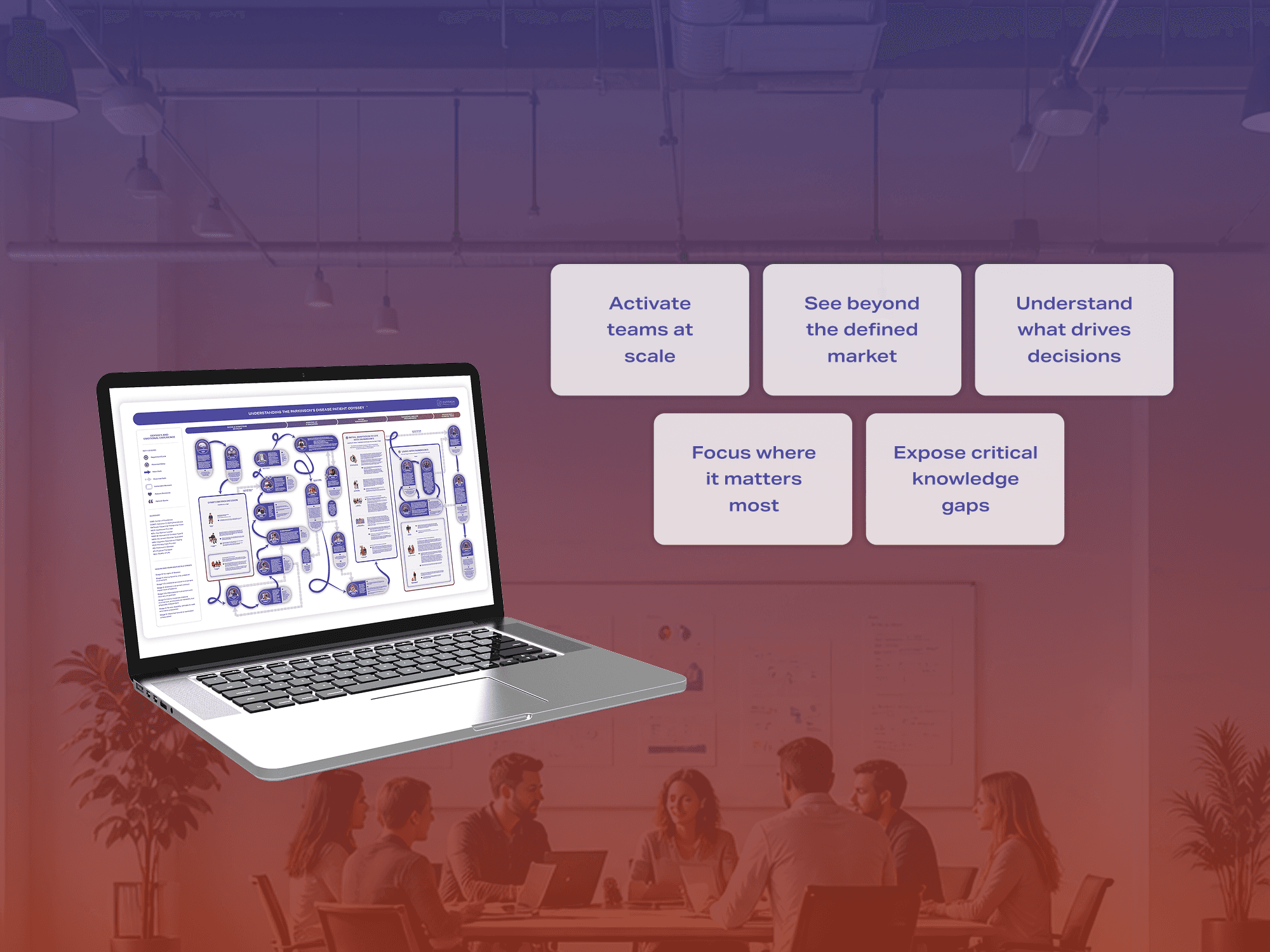
My process focused on translating complex research and emotional insight into a structured, usable system: • Defined the framework and information architecture • Designed visual systems and interaction patterns • Created high-fidelity designs and supporting assets • Collaborated with stakeholders to align on use cases and application The result was a tool that helped teams more clearly understand user experiences, identify opportunities for intervention, and make more informed product and strategic decisions.